I’m Gary Jorgenson, RN, and for decades, I’ve dedicated my career to combining technology and nursing, including building careplans.com as a resource for clinicians. My story with the Department of Veterans Affairs (VA) begins in the late 1970s when I enlisted in the Marine Corps, shortly after the Vietnam War ended. I didn’t serve in the war myself, but I trained and served alongside many veterans who had. To this day, I carry a deep respect for them—they endured unimaginable hardships overseas, only to return home to neglect, disrespect, and mistreatment from average citizens and institutions like the VA. Watching their struggles shaped my early views of the system, fostering a mistrust that kept me away for over 40 years. That changed in 2020 after a serious medullary stroke left me needing assistance with mobility. A fellow veteran suggested I reach out to the VA, and I reluctantly did so, expecting little. Despite my skepticism, I was met with respect, efficient care, and comprehensive support. Over time, I’ve shifted all my healthcare needs to the VA and now encourage my veteran friends to seek its help. As a nurse, I urge my colleagues to refer veterans to this transformed system—it’s not the VA of the past; it’s a provider of high-quality, veteran-centered care.
The Roots of My Mistrust and Its Echoes Today
When my boots hit the ground at Parris Island S.C. in 1976, I grew up fast. I was so shocked and scared that it seemed my body didn’t work for a week. Marine drill instructors seem to have that effect. Going in as a tall skinny teenager, I ended up hospitalized not once, but twice. By the time I finished boot camp, I was not afraid of anyone or anything and believed I could accomplish whatever I put my mind to—a mindset Marines often adopt.
I didn’t serve in Vietnam but trained and served alongside many who had. Those who would talk about their experience shared stories of coming home to a society that spat on them—literally and figuratively. They faced stigma, undiagnosed PTSD (which wasn’t even formally recognized until 1980), and a VA that often failed to deliver on promises of support (National Health Care for the Homeless Council [NHCHC], n.d.). Agent Orange exposure led to long-term illnesses, but claims were denied or delayed, breeding resentment (NHCHC, 2013). I saw how this mistreatment compounded their trauma, leading to higher rates of homelessness and mental health issues. A 1988 study highlighted the psychological toll, with inadequate VA services exacerbating problems (Kulka et al., 1990). This generational distrust influenced me; I didn’t experience the same trauma of Vietnam, but adopted the same opinion of the VA
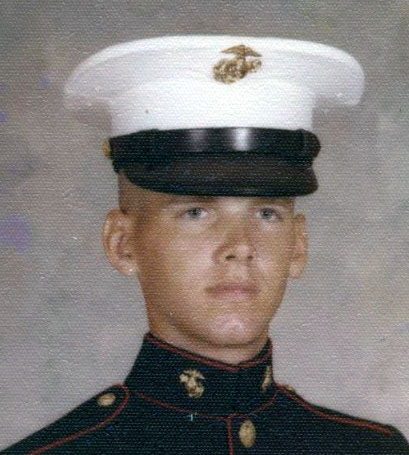
After bootcamp, I learned that adequate healthcare meant befriending a corpsman, and beyond that there wasn’t much. I got married toward the end of my enlistment and learned that care for families was almost non-existent. I remember being told that “if the Marines wanted you to have a family, they’d issue you one”. After my discharge, I often told friends that VA healthcare was worth exactly what we paid for it, nothing. The care was terrible, and I had no intention of using it.
For many veterans, that mistrust persists, especially among homeless veterans with PTSD. On Reddit, one user described taking in a homeless veteran who refuses VA help due to past traumas and futility (u/Throwaway_85769, 2024). Another thread asks, “Why are there so many homeless veterans?” with responses citing VA failures and societal stigma (u/Remarkable_Ad_8108, 2024). The NHCHC notes that homeless veterans often view VA processes as a “complex maze” that dehumanizes them, leading to avoidance (NHCHC, n.d.). Factors like insensitive providers and unfulfilled entitlements erode confidence, making PTSD care harder to access (NHCHC, 2013). Studies show combat exposure and PTSD contribute to barriers (Tsai & Rosenheck, 2015). In 2025, with an aging Vietnam cohort, this legacy drives self-reliance over institutional help (Montgomery et al., 2020).
As nurses, we encounter these veterans in community settings—perhaps like a recent simulation of a homeless veteran with burns and PTSD. Recognizing this mistrust is key, rooted in both past and ongoing perceptions of bureaucracy.
The VA’s Dramatic Transformation
My turnaround came from experiencing the VA’s evolution firsthand. By the mid-1990s, the system faced crisis, criticized for fragmented care and inefficiencies (Kizer, 1996). Facing privatization threats, it underwent a major reengineering under Dr. Kenneth W. Kizer, appointed Under Secretary for Health in 1994 (Kizer, 1996). Reforms focused on accountability, care coordination, quality improvement, and technology integration (Asch et al., 2004). Between 1995 and 1999, this “extreme makeover” shifted to outpatient and preventive care, suiting an aging veteran population (Kizer, 1996). By 2000, quality metrics surpassed Medicare in preventive care and chronic disease management (Jha et al., 2003).
Independent studies confirm this shift. A New England Journal of Medicine analysis showed significant improvements across nine indicators from 1994-2000 (Jha et al., 2003). Affiliations with academic medical schools and managed care principles drove innovations (Kizer, 1996). Kizer’s leadership turned the VA into a model, credited with top U.S. care by the early 2000s (Asch et al., 2004). My 2020 experience reflected this—prompt, respectful service far from Vietnam vets’ stories.
My Stroke and Loss of Mobility
In October 2020, a serious medullary stroke affected my balance and ability to walk. Later, shopping online for a mobility device, a veteran friend suggested the VA. With a low opinion from past experiences, I reached out, figuring there was little to lose. To say I was surprised is an understatement. From my first contact, the VA was respectful, attentive, and provided excellent care. I’ve since transferred all my healthcare needs from civilian providers to the VA and couldn’t be happier.
Current Quality: Why Nurses Should Trust the VA
As of August 2025, the VA excels. A living systematic review of 36 studies found VA care equal to or better than non-VA in quality and safety domains (Hempel et al., 2023). In CMS Hospital Quality Star Ratings, over 58% of VA hospitals earned 4- or 5-stars, outperforming non-VA facilities (U.S. Department of Veterans Affairs [VA], 2024). For cardiovascular care, VA matches or exceeds community standards (Groeneveld et al., 2018). Patient satisfaction surpasses Medicare Advantage on 10 of 11 indicators (VA, 2023). The Quality Enhancement Research Initiative (QUERI) 2021-2025 has implemented over 60 effective practices, supporting thousands of employees (VA, 2021).
Specialized programs address veteran needs. The PACT Act expands benefits for toxic exposures, including Agent Orange and burn pits, aiding Vietnam-era vets and others (VA, 2022). HUD-VASH pairs housing vouchers with case management, stabilizing homeless veterans (NHCHC, 2013). These reduce hospitalizations and improve outcomes with integrated mental and physical health services (O’Hanlon et al., 2017).
Challenges like rural access and wait times persist, but VA care excels in key metrics (VA, 2024). As a nurse, I’ve seen this quality transform my life.
Barriers for Homeless Veterans and How to Overcome Them
Homeless veterans face multifaceted barriers. PTSD links to chronic homelessness (Tsai & Rosenheck, 2015). Risk factors include mental health issues (76% incidence), substance abuse, and arthritis (NHCHC, n.d.). Unsheltered homelessness worsens anxiety, depression, and stress (Montgomery et al., 2020). VA barriers include eligibility (e.g., “bad paper” discharges), geographic access, and system complexity (NHCHC, 2013).
Trust issues—insensitive staff and bureaucracy—lead to avoidance (NHCHC, n.d.). NHCHC advocates trauma-informed care and outreach to rebuild confidence (NHCHC, 2013). In 2025, PTSD remains a top concern, creating stability barriers (Montgomery et al., 2020).
Nurses can screen for service history, validate concerns, and refer. Use MyVA411 (800-698-2411) for general assistance, the Veterans Crisis Line (988, press 1, or 1-800-273-8255, press 1) for crises, and va.gov for benefits (VA, 2025). For homeless vets, connect to Health Care for Homeless Veterans programs (NHCHC, 2013). Peer support, like my story, encourages engagement.
The Nurse’s Role in Advocacy
In my work, I’ve learned nurses influence population health through assessment and evidence-based practice. For veterans, this means addressing homelessness and isolation. Referring to the VA provides integrated care that reduces costs and improves well-being (O’Hanlon et al., 2017). Simulations show how psychosocial needs intersect with physical ones—VA excels here.
My knowledge of Columbus resources, like the Ohio Department of Mental Health, complements VA services, but its specialized focus is ideal. Nurses should build referral networks, advocate for wraparound services, and educate on reforms to counter mistrust.
A Call to Action
The VA transformed since the 1990s, driven by bold leadership and innovation. My journey—from mistrust rooted in Vietnam vets’ experiences to reliance—proves it. Fellow nurses, refer veterans confidently: It’s high-quality care they deserve.
Disclaimer: Based on personal experience as of August 2025; consult va.gov for latest updates.
References
- Asch, S. M., McGlynn, E. A., Hogan, M. M., Hayward, R. A., Shekelle, P., Rubenstein, L., Keesey, J., Adams, J., & Kerr, E. A. (2004). Comparison of quality of care for patients in the Veterans Health Administration and patients in a national sample. Annals of Internal Medicine, 141(12), 938–945. https://doi.org/10.7326/0003-4819-141-12-200412210-00010
- Groeneveld, P. W., Medvedeva, E. L., Walker, L. D., Segal, A. G., & Richardson, D. M. (2018). Outcomes of care for ischemic heart disease and chronic heart failure in the Veterans Health Administration. JAMA Cardiology, 3(7), 581–588. https://doi.org/10.1001/jamacardio.2018.1115
- Hempel, S., Miake-Lye, I., Beroes, J. M., & Shekelle, P. G. (2023). Evidence synthesis: Quality and safety of care in the Veterans Health Administration. Journal of General Internal Medicine, 38(Suppl 3), 875–883. https://doi.org/10.1007/s11606-023-08179-6
- Jha, A. K., Perlin, J. B., Kizer, K. W., & Dudley, R. A. (2003). Effect of the transformation of the Veterans Affairs Health Care System on the quality of care. New England Journal of Medicine, 348(22), 2218–2227. https://doi.org/10.1056/NEJMsa021899
- Kizer, K. W. (1996). Vision for change: A plan to restructure the Veterans Health Administration. U.S. Department of Veterans Affairs. https://www.va.gov/HEALTHPOLICYPLANNING/rx2010/vfc.pdf
- Kulka, R. A., Schlenger, W. E., Fairbank, J. A., Hough, R. L., Jordan, B. K., Marmar, C. R., & Weiss, D. S. (1990). Trauma and the Vietnam War generation: Report of findings from the National Vietnam Veterans Readjustment Study. Brunner/Mazel.
- Montgomery, A. E., Dichter, M. E., & Thomasson, A. M. (2020). Veteran homelessness: A review of recent research. Journal of Social Distress and Homelessness, 29(2), 109–118. https://doi.org/10.1080/10530789.2020.1729878
- National Health Care for the Homeless Council. (n.d.). Homeless veterans and health care. https://nhchc.org/wp-content/uploads/2019/08/HomelessVetsHealthCare.pdf
- National Health Care for the Homeless Council. (2013, January 25). Health and homelessness among veterans: A community guide to ending veteran homelessness. https://nhchc.org/wp-content/uploads/2019/08/Vets-Final-Report_1-25-13.pdf
- O’Hanlon, C., Huang, C., Sloss, E., Anhang Price, R., Hussey, P., Farmer, C., & Gidengil, C. (2017). Comparing VA and non-VA quality of care: A systematic review. Journal of General Internal Medicine, 32(1), 105–121. https://doi.org/10.1007/s11606-016-3775-2
- Tsai, J., & Rosenheck, R. A. (2015). Risk factors for homelessness among US veterans. Epidemiologic Reviews, 37, 177–195. https://doi.org/10.1093/epirev/mxu004
- U.S. Department of Veterans Affairs. (2021). Quality Enhancement Research Initiative (QUERI) 2021-2025 strategic plan. https://www.queri.research.va.gov/about/strategic_plan.cfm
- U.S. Department of Veterans Affairs. (2022). PACT Act: Expanding VA benefits for toxic exposures. https://www.va.gov/resources/the-pact-act-and-your-va-benefits/
- U.S. Department of Veterans Affairs. (2023). Veterans Health Administration performance report FY 2023. https://www.va.gov/opa/docs/remediation-required/oei/VA-FY24-Annual-Performance-Report.pdf
- U.S. Department of Veterans Affairs. (2024). CMS Hospital Quality Star Ratings for VA facilities. https://www.va.gov/quality-of-care/
- U.S. Department of Veterans Affairs. (2025). Contact us. https://www.va.gov/contact-us/
- u/Remarkable_Ad_8108. (2024, December 10). Why are there so many homeless veterans? [Online forum post]. Reddit. https://www.reddit.com/r/NoStupidQuestions/comments/1hbc8rt/why_are_there_so_many_homeless_veterans/
- u/Throwaway_85769. (2024, May 5). I took in a homeless veteran. He refuses to go to the VA. Is there another way to get him medical care? [Online forum post]. Reddit. https://www.reddit.com/r/VeteransBenefits/comments/1cks5x3/i_took_in_a_homeless_veteran_he_refuses_to_go_to/
- u/ThrowRA-TooManyVets. (2018, April 9). Why there are so many homeless veterans? [Online forum post]. Reddit. https://www.reddit.com/r/AskAnAmerican/comments/8ayf7h/why_there_are_so_many_homeless_veterans/